中文Learning Chinese
with an AI Mind

FREE PREVIEW · MODULE 1 · CHAPTER 3

Meet My Family

认识我的家人
Understand first. Imitate next. Speak for yourself. Follow Anna, Li Ming, and Wang Li through practical real-life tasks.
Start lesson
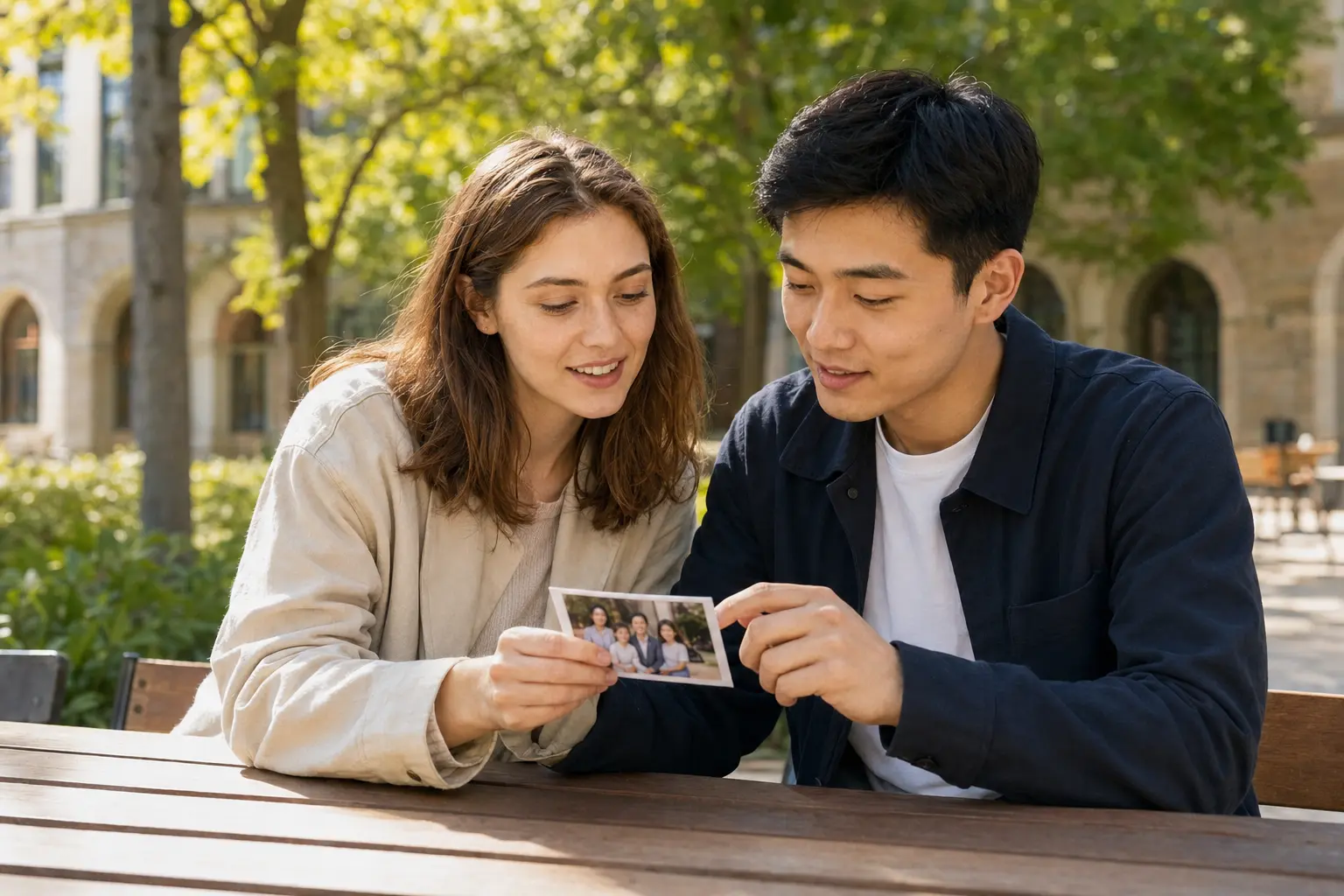
Anna和李明在第3章的真实生活场景中练习中文
Zhè shì wǒ de jiārén.
这是我的家人。
This is my family.

从认识一个人到认识一个家庭From Meeting One Person to Meeting a Family

在第一章和第二章,Anna和李明已经学会介绍:

姓名;

国籍;

使用的语言。

Use the language or information shown below.

Anna可以说:

Nǐ hǎo!
你好!
Hello!
Wǒ jiào Anna.
我叫Anna。
My name is Anna.
Wǒ shì Měiguó rén.
我是美国人。
I am American.
Wǒ shuō Yīngyǔ.
我说英语。
I speak English.

今天,Anna带来了一张家庭照片。

照片里有:

Anna的爸爸;

Anna的妈妈;

Anna的妹妹Emma。

李明想知道:

这是谁?

他是谁?

她是谁?

Anna有没有哥哥、姐姐、弟弟或妹妹?

Anna的家人好吗?

本章的任务是:

看家庭照片

→ 询问人物是谁

→ 介绍家庭成员

→ 使用“他”和“她”谈论别人

→ 使用“我的/你的/他的/她的”说明关系

→ 询问有没有兄弟姐妹

→ 使用“有/没有”回答

→ 询问家人的近况

→ 完成一段简短的家庭介绍

你将学会什么?What Will You Learn?

完成本章后,你将能够:

After this chapter, you will be able to:

介绍基本家庭成员;

询问“这是谁?”;

使用“他”和“她”谈论别人;

Use the language or information shown below.

使用“我的、你的、他的、她的”说明人物关系;

Use the language or information shown below.

询问别人有没有哥哥、姐姐、弟弟或妹妹;

使用“有”和“没有”回答;

Use the language or information shown below.

询问自己和家人的近况;

使用“呢”继续同一个话题;

Use the language or information shown below.

使用“也”补充相同的信息;

Use the language or information shown below.

在不透露私人家庭信息的情况下,使用真实或虚构家庭完成介绍。

先看图片,再说1. Look First

想象Anna手里拿着一张家庭照片。

照片里有四个人:

Anna;

Anna的爸爸;

Anna的妈妈;

Anna的妹妹Emma。

先不要读完整对话。

Begin with this step.

先观察:

Begin with this step.

谁是Anna?

谁可能是她的爸爸?

谁可能是她的妈妈?

谁可能是她的妹妹?

学习家庭语言时,先认出人物关系,再把词放进句子。

家庭成员2. Family Words

Core Family Words

Pinyin中文English
jiāfamily; home
jiārén家人family members
bàba爸爸father; dad
māma妈妈mother; mom
gēge哥哥older brother
jiějie姐姐older sister
dìdi弟弟younger brother
mèimei妹妹younger sister
xiōngdì jiěmèi兄弟姐妹siblings

本章不学习家庭成员的数量表达。

主动使用:

我有哥哥。

我没有姐姐。

我有妹妹。

不要在本章加入:

Pay attention to the restriction in this instruction.

一个哥哥;

两个妹妹;

几个兄弟姐妹。

数字和量词将在后面的章节中系统学习。

哥哥、弟弟、姐姐和妹妹Older and Younger

中文通常会说明兄弟姐妹比说话人年长还是年幼。

中文English
哥哥older brother
弟弟younger brother
姐姐older sister
妹妹younger sister

英语常使用brother或sister。

中文通常需要根据年龄关系选择更具体的称谓。

发音提示Pronunciation Notice

下面这些家庭称谓通常把第二个音节读得轻一些:

bàba
爸爸
father; dad
māma
妈妈
mother; mom
gēge
哥哥
older brother
jiějie
姐姐
older sister
dìdi
弟弟
younger brother
mèimei
妹妹
younger sister

先听完整词,再模仿完整词。

Begin with this step.

不要把两个音节都读得一样重。

Pay attention to the restriction in this instruction.

这是谁?3. Who Is This?

李明指着照片中的一个人问:

Zhè shì shéi?
这是谁?
Who is this?

Anna回答:

Zhè shì wǒ de māma.
这是我的妈妈。
This is my mother.

核心结构:

Core pattern:

这+是+谁?

回答:

Answer:

这+是+Person

More Examples

Zhè shì shéi?
这是谁?
Who is this?
Zhè shì wǒ de bàba.
这是我的爸爸。
This is my father.
Zhè shì shéi?
这是谁?
Who is this?
Zhè shì wǒ de mèimei Emma.
这是我的妹妹Emma。
This is my younger sister, Emma.

引导练习一Guided Practice 1

根据提示完成回答。

Use the information given to complete the activity.

1

father

Zhè shì wǒ de __________.
这是我的__________。
This is my __________.

2

mother

Zhè shì wǒ de __________.
这是我的__________。
This is my __________.

3

younger sister

Zhè shì wǒ de __________.
这是我的__________。
This is my __________.

4

older brother

Zhè shì wǒ de __________.
这是我的__________。
This is my __________.

4. 他 and 她

使用“他”和“她”

当人物已经清楚以后,不需要每次都重复姓名。

可以使用:

Pinyin中文English
he; him
she; her

“他”和“她”读音相同:

但是汉字不同。

Ask About a Man

Tā shì shéi?
他是谁?
Who is he?
Tā shì wǒ de bàba.
他是我的爸爸。
He is my father.

Ask About a Woman

Tā shì shéi?
她是谁?
Who is she?
Tā shì wǒ de māma.
她是我的妈妈。
She is my mother.

Ask About Emma

Tā shì shéi?
她是谁?
Who is she?
Tā shì wǒ de mèimei Emma.
她是我的妹妹Emma。
She is my younger sister, Emma.

这是谁?and 他/她是谁?

两种问法

Pointing to a Picture

Zhè shì shéi?
这是谁?
Who is this?

Talking About a Known Person

Tā shì shéi?
他是谁?
Who is he?
Tā shì shéi?
她是谁?
Who is she?

引导练习二Guided Practice 2

完成句子。

Complete the sentence.

1

Tā shì shéi?
她是谁?
Who is she?
Tā shì wǒ de __________.
她是我的__________。
She is my __________.

2

Tā shì shéi?
他是谁?
Who is he?
Tā shì wǒ de __________.
他是我的__________。
He is my __________.

3

__________ shì shéi?
__________是谁?
Who is she?
Tā shì wǒ de mèimei.
她是我的妹妹。
She is my younger sister.

4

__________ shì shéi?
__________是谁?
Who is he?
Tā shì wǒ de gēge.
他是我的哥哥。
He is my older brother.

5. Possession with 的

用“的”说明人物关系

“的”可以连接一个人和与这个人有关的信息。

核心结构:

Core pattern:

Person+的+Noun

例如:

For example:
wǒ de bàba
我的爸爸
my father
nǐ de māma
你的妈妈
your mother
tā de gēge
他的哥哥
his older brother
tā de mèimei
她的妹妹
her younger sister

Complete Family Phrases

Pinyin中文English
wǒ de bàba我的爸爸my father
nǐ de māma你的妈妈your mother
tā de gēge他的哥哥his older brother
tā de mèimei她的妹妹her younger sister

本书现阶段统一保留完整结构:

我的爸爸

你的妈妈

他的哥哥

她的妹妹

自然口语中,近亲称谓前有时会省略“的”。

但本阶段先使用完整形式,让人物关系更清楚。

Compare

Zhè shì māma.
这是妈妈。
This is Mom.
Zhè shì wǒ de māma.
这是我的妈妈。
This is my mother.

第二句明确说明:

她是谁的妈妈。

引导练习三Guided Practice 3

选择正确的词。

Choose the best option.

1

我是Anna。

这是__________爸爸。

a. 我的

b. 你的

c. 他的

Answer: __________

2

你是David。

这是__________妈妈吗?

a. 我的

b. 你的

c. 她的

Answer: __________

3

他叫Tom。

这是__________姐姐。

a. 他的

b. 她的

c. 我的

Answer: __________

4

她叫Sofia。

这是__________弟弟。

a. 你的

b. 他的

c. 她的

Answer: __________

第一次家庭对话6. First Family Conversation

Anna给李明看家庭照片。

李明

Anna, zhè shì shéi?
Anna,这是谁?
Anna, who is this?

Anna

Zhè shì wǒ de māma.
这是我的妈妈。
This is my mother.

李明

Tā hǎo ma?
她好吗?
Is she well?

Anna

Tā hěn hǎo, xièxie.
她很好,谢谢。
She is well, thank you.

李明

Zhè shì nǐ de bàba ma?
这是你的爸爸吗?
Is this your father?

Anna

Shì. Zhè shì wǒ de bàba.
是。这是我的爸爸。
Yes. This is my father.

李明

Tā hǎo ma?
他好吗?
Is he well?

Anna

Tā yě hěn hǎo.
他也很好。
He is well too.

Read Again

Round 1

读懂人物关系。

Round 2

分角色朗读。

Read aloud by role.

Round 3

盖住英文,只看拼音和中文。

Round 4

更换“爸爸”和“妈妈”。

Round 5

使用虚构家庭照片重新完成对话。

Use the language or information shown below.

询问近况7. Ask How Someone Is

第一章中,你学过:

Nǐ hǎo!
你好!
Hello!

现在比较:

Nǐ hǎo ma?
你好吗?
How are you?

“吗”把陈述或判断变成是非问句。

但“你好吗?”在日常交流中通常自然理解为:

How are you?

Answer

Wǒ hěn hǎo, xièxie.
我很好,谢谢。
I’m well, thank you.

继续问回去:

Nǐ ne?
你呢?
How about you?

回答:

Answer:
Wǒ yě hěn hǎo.
我也很好。
I’m well too.

Complete Exchange

A:

Nǐ hǎo ma?
你好吗?
How are you?

B:

Wǒ hěn hǎo, xièxie. Nǐ ne?
我很好,谢谢。你呢?
I’m well, thank you. How about you?

A:

Wǒ yě hěn hǎo.
我也很好。
I’m well too.

Subject+很+Adjective

形容词直接描述人物

核心结构:

Core pattern:

Subject+很+好

Wǒ hěn hǎo.
我很好。
I’m well.
Tā hěn hǎo.
他很好。
He is well.
Tā hěn hǎo.
她很好。
She is well.
Wǒ de māma hěn hǎo.
我的妈妈很好。
My mother is well.

这里不使用“是”。

❌ 我是很好。

✅ 我很好。

“是”连接身份或类别:

Tā shì wǒ de bàba.
他是我的爸爸。
He is my father.

“很好”直接描述状态:

Tā hěn hǎo.
他很好。
He is well.

引导练习四Guided Practice 4

选择“是”或不填。

Choose the best option.

1

我__________很好。

2

她__________很好。

3

他__________我的哥哥。

4

Emma__________Anna的妹妹。

5

我的爸爸__________很好。

询问家人的近况8. Ask About Family Members

你可以更换主语,询问不同的人。

Nǐ de bàba hǎo ma?
你的爸爸好吗?
Is your father well?
Tā hěn hǎo, xièxie.
他很好,谢谢。
He is well, thank you.
Nǐ de māma hǎo ma?
你的妈妈好吗?
Is your mother well?
Tā hěn hǎo.
她很好。
She is well.

Use 呢 to Continue the Topic

用“呢”继续同一话题

李明已经问过Anna的爸爸。

接着问妈妈时,可以说:

Nǐ de māma ne?
你的妈妈呢?
How about your mother?

Anna回答:

Tā yě hěn hǎo.
她也很好。
She is well too.

这里的“呢”表示:

那么另一个人呢?

引导练习五Guided Practice 5

完成对话。

Complete the dialogue.

A:

Nǐ de bàba hǎo ma?
你的爸爸好吗?
Is your father well?

B:

Tā __________ hǎo, xièxie.
他__________好,谢谢。
He is well, thank you.

A:

Nǐ de māma __________?
你的妈妈__________?
How about your mother?

B:

Tā __________ hěn hǎo.
她__________很好。
She is well too.

9. 有 and 没有

表达“有”和“没有”

Anna有妹妹。

Wǒ yǒu mèimei.
我有妹妹。
I have a younger sister.

Anna没有哥哥。

Wǒ méiyǒu gēge.
我没有哥哥。
I do not have an older brother.

核心结构:

Core pattern:

Subject+有+Noun

Subject+没有+Noun

“有”的否定形式Important Negative Form

“有”的否定不是“不有”。

❌ 我不有哥哥。

✅ 我没有哥哥。

使用:

Use the language or information shown below.

没有

More Examples

Wǒ yǒu mèimei.
我有妹妹。
I have a younger sister.
Wǒ méiyǒu jiějie.
我没有姐姐。
I do not have an older sister.
Tā yǒu gēge.
她有哥哥。
She has an older brother.
Tā méiyǒu dìdi.
他没有弟弟。
He does not have a younger brother.

引导练习六Guided Practice 6

写出相反意思。

Example

Wǒ yǒu mèimei.
我有妹妹。
I have a younger sister.

Wǒ méiyǒu mèimei.
我没有妹妹。
I do not have a younger sister.

1

Wǒ yǒu gēge.
我有哥哥。
I have an older brother.

2

Tā yǒu jiějie.
她有姐姐。
She has an older sister.

3

Tā méiyǒu dìdi.
他没有弟弟。
He does not have a younger brother.

4

Wǒ méiyǒu mèimei.
我没有妹妹。
I do not have a younger sister.

10. Ask with 有……吗?

询问别人有没有家人

核心问句:

Core question:

Subject+有+Noun+吗?

Nǐ yǒu gēge ma?
你有哥哥吗?
Do you have an older brother?

回答:

Answer:
Yǒu.
有。
Yes.

或者:

Wǒ yǒu gēge.
我有哥哥。
I have an older brother.
Nǐ yǒu jiějie ma?
你有姐姐吗?
Do you have an older sister?

回答:

Answer:
Méiyǒu.
没有。
No.

或者:

Wǒ méiyǒu jiějie.
我没有姐姐。
I do not have an older sister.

Ask About Siblings

Nǐ yǒu xiōngdì jiěmèi ma?
你有兄弟姐妹吗?
Do you have siblings?

可能的回答:

Yǒu. Wǒ yǒu mèimei.
有。我有妹妹。
Yes. I have a younger sister.
Méiyǒu.
没有。
No.

Short Answer and Full Answer

Short

Yǒu.
有。
Yes.
Méiyǒu.
没有。
No.

Full

Wǒ yǒu mèimei.
我有妹妹。
I have a younger sister.
Wǒ méiyǒu gēge.
我没有哥哥。
I do not have an older brother.

练习时优先使用完整回答。

引导练习七Guided Practice 7

根据虚构家庭信息回答。

Use the information given to complete the activity.

Anna

有妹妹;

没有哥哥;

没有姐姐;

没有弟弟。

1

Anna yǒu mèimei ma?
Anna有妹妹吗?
Does Anna have a younger sister?

2

Anna yǒu gēge ma?
Anna有哥哥吗?
Does Anna have an older brother?

3

Anna yǒu jiějie ma?
Anna有姐姐吗?
Does Anna have an older sister?

4

Anna yǒu dìdi ma?
Anna有弟弟吗?
Does Anna have a younger brother?

Anna的家庭11. Anna’s Family

本书中的Anna家庭信息固定为:

爸爸;

妈妈;

妹妹Emma。

Anna可以说:

Zhè shì wǒ de jiārén.
这是我的家人。
This is my family.
Zhè shì wǒ de bàba.
这是我的爸爸。
This is my father.
Tā hěn hǎo.
他很好。
He is well.
Zhè shì wǒ de māma.
这是我的妈妈。
This is my mother.
Tā yě hěn hǎo.
她也很好。
She is well too.
Zhè shì wǒ de mèimei Emma.
这是我的妹妹Emma。
This is my younger sister, Emma.
Wǒ yǒu mèimei.
我有妹妹。
I have a younger sister.
Wǒ méiyǒu gēge、jiějie hé dìdi.
我没有哥哥、姐姐和弟弟。
I do not have an older brother, older sister, or younger brother.

最后一句中的“和”先作为连接多个家庭成员的完整表达理解即可。

本章核心输出也可以拆成短句:

我没有哥哥。

我没有姐姐。

我没有弟弟。

完整家庭对话12. Complete Family Conversation

李明

Zhè shì nǐ de jiārén ma?
这是你的家人吗?
Is this your family?

Anna

Shì. Zhè shì wǒ de jiārén.
是。这是我的家人。
Yes. This is my family.

李明

Zhè shì shéi?
这是谁?
Who is this?

Anna

Zhè shì wǒ de bàba.
这是我的爸爸。
This is my father.

李明

Tā hǎo ma?
他好吗?
Is he well?

Anna

Tā hěn hǎo, xièxie.
他很好,谢谢。
He is well, thank you.

李明

Zhè shì nǐ de māma ma?
这是你的妈妈吗?
Is this your mother?

Anna

Shì. Zhè shì wǒ de māma.
是。这是我的妈妈。
Yes. This is my mother.

李明

Nǐ de māma ne? Tā hǎo ma?
你的妈妈呢?她好吗?
How about your mother? Is she well?

Anna

Tā yě hěn hǎo.
她也很好。
She is well too.

李明

Tā shì shéi?
她是谁?
Who is she?

Anna

Tā shì wǒ de mèimei Emma.
她是我的妹妹Emma。
She is my younger sister, Emma.

李明

Nǐ yǒu xiōngdì jiěmèi ma?
你有兄弟姐妹吗?
Do you have siblings?

Anna

Yǒu. Wǒ yǒu mèimei.
有。我有妹妹。
Yes. I have a younger sister.

李明

Nǐ yǒu gēge ma?
你有哥哥吗?
Do you have an older brother?

Anna

Méiyǒu. Wǒ méiyǒu gēge.
没有。我没有哥哥。
No. I do not have an older brother.

Read Again

Round 1

找出所有家庭成员。

Round 2

圈出“我的、你的”。

Round 3

圈出“他”和“她”。

Round 4

圈出“有”和“没有”。

Round 5

更换一张虚构家庭照片重新完成对话。

信息差任务13. Information-Gap Task

两位学习者分别拥有不同的虚构家庭信息。

不要把完整卡片给对方看。

Pay attention to the restriction in this instruction.

Student A’s Card

Anna

Family MemberInformation
爸爸
妈妈
哥哥没有
姐姐没有
弟弟没有
妹妹

Student A不知道李明的兄弟姐妹信息。

需要问:

李明有哥哥吗?

李明有姐姐吗?

李明有弟弟吗?

李明有妹妹吗?

Student B’s Card

李明

Family MemberInformation
爸爸
妈妈
哥哥
姐姐没有
弟弟没有
妹妹

Student B不知道Anna的兄弟姐妹信息。

需要问:

Anna有哥哥吗?

Anna有姐姐吗?

Anna有弟弟吗?

Anna有妹妹吗?

Useful Questions

Tā yǒu gēge ma?
他有哥哥吗?
Does he have an older brother?
Tā yǒu jiějie ma?
她有姐姐吗?
Does she have an older sister?
Tā yǒu xiōngdì jiěmèi ma?
他有兄弟姐妹吗?
Does he have siblings?

使用完整句子回答。

Use the language or information shown below.

你的家庭信息14. Your Family Chart

可以使用真实信息,也可以创建一个完全虚构的家庭。

Family Member有/没有
爸爸__________
妈妈__________
哥哥__________
姐姐__________
弟弟__________
妹妹__________

然后说:

Wǒ yǒu __________.
我有__________。
I have __________.
Wǒ méiyǒu __________.
我没有__________。
I do not have __________.

隐私选择Privacy Choice

家庭情况可能涉及私人信息。

你可以:

使用真实信息;

Use the language or information shown below.

只分享自己愿意分享的部分;

使用虚构家庭;

Use the language or information shown below.

跳过不愿意回答的问题。

课堂和AI练习都不应要求:

真实家庭照片;

家人的真实姓名;

家庭住址;

电话号码;

婚姻、健康或其他私人家庭信息。

本章的目标是练习语言,不是收集个人资料。

介绍一个虚构家庭15. Introduce a Fictional Family

使用下面的人物卡:

Use the language or information shown below.

Daniel — father

Maria — mother

Tom — older brother

Sofia — younger sister

完成介绍:

Complete the activity below.
Zhè shì wǒ de jiārén.
这是我的家人。
This is my family.
Zhè shì __________.
这是__________。
This is __________.
Tā shì wǒ de __________.
他是我的__________。
He is my __________.
Tā shì wǒ de __________.
她是我的__________。
She is my __________.
Wǒ yǒu __________.
我有__________。
I have __________.
Wǒ méiyǒu __________.
我没有__________。
I do not have __________.

建立更完整的自我介绍16. Build a Longer Introduction

第一章:

姓名

第二章:

国籍和语言

第三章:

家庭

现在把它们连接起来。

Nǐ hǎo!
你好!
Hello!
Wǒ jiào __________.
我叫__________。
My name is __________.
Wǒ shì __________ rén.
我是__________人。
I am __________.
Wǒ shuō __________.
我说__________。
I speak __________.
Zhè shì wǒ de jiārén.
这是我的家人。
This is my family.
Zhè shì wǒ de __________.
这是我的__________。
This is my __________.
Tā hěn hǎo.
他/她很好。
He/She is well.
Wǒ yǒu __________.
我有__________。
I have __________.
Wǒ méiyǒu __________.
我没有__________。
I do not have __________.
Hěn gāoxìng rènshi nǐ!
很高兴认识你!
Nice to meet you!

Speak Without Reading

Round 1

看着完整介绍朗读。

Round 2

只看提示:

姓名

国籍

语言

家庭

没有

Round 3

合上书,说六到八句。

没听懂时继续交流17. Communication Repair

如果没有听清人物关系,可以使用:

Qǐng zài shuō yí cì.
请再说一次。
Please say it again.

也可以确认:

Tā shì nǐ de mèimei ma?
她是你的妹妹吗?
Is she your younger sister?
Tā shì nǐ de gēge ma?
他是你的哥哥吗?
Is he your older brother?

Short Practice

A:

Tā shì wǒ de jiějie.
她是我的姐姐。
She is my older sister.

B:

Qǐng zài shuō yí cì.
请再说一次。
Please say it again.

A:

Tā shì wǒ de jiějie.
她是我的姐姐。
She is my older sister.

B:

Tā shì nǐ de jiějie ma?
她是你的姐姐吗?
Is she your older sister?

A:

Shì.
是。
Yes.

第三章最终任务18. Final Mission

介绍一个家庭Introduce a Family

使用真实信息或虚构家庭,完成一次家庭交流。

Use the language or information shown below.

不要背诵固定课文。

Pay attention to the restriction in this instruction.

你需要:

介绍自己的姓名、国籍和语言;

说“这是我的家人”;

介绍至少两位家庭成员;

使用“他”和“她”;

Use the language or information shown below.

使用完整的“我的/你的/他的/她的”;

Use the language or information shown below.

询问“这是谁?”;

询问“他是谁?”或“她是谁?”;

询问家人是否安好;

使用“呢”继续同一话题;

Use the language or information shown below.

使用“也”补充相同信息;

Use the language or information shown below.

询问对方有没有兄弟姐妹;

使用“有”和“没有”回答;

Use the language or information shown below.

没听清时,请对方再说一次。

Mission Path

这是我的家人。

这是谁?

这是我的爸爸。

他好吗?

他很好,谢谢。

你的妈妈呢?

她也很好。

她是谁?

她是我的妹妹。

你有兄弟姐妹吗?

有。我有妹妹。

你有哥哥吗?

没有。我没有哥哥。

每次练习更换:

家庭照片;

人物关系;

兄弟姐妹信息;

“他”或“她”;

“有”或“没有”。

参考对话Sample Conversation

A:

Zhè shì nǐ de jiārén ma?
这是你的家人吗?
Is this your family?

B:

Shì. Zhè shì wǒ de jiārén.
是。这是我的家人。
Yes. This is my family.

A:

Zhè shì shéi?
这是谁?
Who is this?

B:

Zhè shì wǒ de māma.
这是我的妈妈。
This is my mother.

A:

Tā hǎo ma?
她好吗?
Is she well?

B:

Tā hěn hǎo, xièxie.
她很好,谢谢。
She is well, thank you.

A:

Nǐ de bàba ne?
你的爸爸呢?
How about your father?

B:

Tā yě hěn hǎo.
他也很好。
He is well too.

A:

Nǐ yǒu xiōngdì jiěmèi ma?
你有兄弟姐妹吗?
Do you have siblings?

B:

Yǒu. Wǒ yǒu mèimei.
有。我有妹妹。
Yes. I have a younger sister.

A:

Nǐ yǒu gēge ma?
你有哥哥吗?
Do you have an older brother?

B:

Méiyǒu. Wǒ méiyǒu gēge.
没有。我没有哥哥。
No. I do not have an older brother.

这是参考答案,不是唯一答案。

没有同伴?使用AI练习19. No Partner? Use AI

复制下面的提示词:

You are my beginner Chinese conversation partner.

I am practising how to introduce a completely fictional family.

Use only vocabulary and structures from Chapters 1–3.

Ask only one question at a time and wait for my answer.

Use these questions:

这是谁?

他是谁?

她是谁?

这是你的家人吗?

你的爸爸好吗?

你的妈妈呢?

你有兄弟姐妹吗?

你有哥哥吗?

你有姐姐吗?

你有弟弟吗?

你有妹妹吗?

Help me practise:

这是我的……

他是我的……

她是我的……

我的/你的/他的/她的……

他很好,谢谢。

她也很好。

我有……

我没有……

有。

没有。

你呢?

请再说一次。

Keep 的 in complete phrases such as:

我的爸爸;

你的妈妈;

他的哥哥;

她的妹妹。

Do not use numbers or measure words.

Do not introduce 一个、两个、几个 or quantity questions.

Do not introduce jobs, workplaces, school subjects, food, drinks or Chapter 4–5 language.

If my current target sentence is incorrect, correct only that sentence and ask me to repeat it.

If I say 请再说一次, repeat only your last sentence.

Use fictional family information only.

Do not ask for real family names, photographs, addresses, phone numbers, ages, occupations, health information or other private details.

Stop after I complete a short fictional family introduction.

核心语言回顾20. Core Language Review

Introduce Your Family

Zhè shì wǒ de jiārén.
这是我的家人。
This is my family.

Ask Who Someone Is

Zhè shì shéi?
这是谁?
Who is this?
Tā shì shéi?
他是谁?
Who is he?
Tā shì shéi?
她是谁?
Who is she?

Introduce a Family Member

Zhè shì wǒ de bàba.
这是我的爸爸。
This is my father.
Tā shì wǒ de mèimei.
她是我的妹妹。
She is my younger sister.

Use Complete Possessive Phrases

wǒ de bàba
我的爸爸
my father
nǐ de māma
你的妈妈
your mother
tā de gēge
他的哥哥
his older brother
tā de mèimei
她的妹妹
her younger sister

Ask How Someone Is

Nǐ de bàba hǎo ma?
你的爸爸好吗?
Is your father well?
Nǐ de māma ne?
你的妈妈呢?
How about your mother?

Answer

Tā hěn hǎo, xièxie.
他很好,谢谢。
He is well, thank you.
Tā yě hěn hǎo.
她也很好。
She is well too.

Ask About Siblings

Nǐ yǒu xiōngdì jiěmèi ma?
你有兄弟姐妹吗?
Do you have siblings?
Nǐ yǒu gēge ma?
你有哥哥吗?
Do you have an older brother?

Answer with 有 or 没有

Wǒ yǒu mèimei.
我有妹妹。
I have a younger sister.
Wǒ méiyǒu gēge.
我没有哥哥。
I do not have an older brother.

Ask for Repetition

Qǐng zài shuō yí cì.
请再说一次。
Please say it again.

你能做到吗?21. Can You Do It?

请合上书以后自评。

Close the book before you assess yourself.

□ I can introduce basic family members.

我可以介绍基本家庭成员。

□ I can ask 这是谁?

我可以询问“这是谁?”。

□ I can ask 他是谁?and 她是谁?

我可以询问“他是谁?”和“她是谁?”。

□ I can use 他 and 她 correctly.

我可以正确使用“他”和“她”。

□ I can use 我的、你的、他的 and 她的.

我可以使用“我的、你的、他的、她的”。

□ I can ask how someone is.

我可以询问一个人的近况。

□ I can answer with 他/她很好.

我可以使用“他/她很好”回答。

□ I can use 呢 to continue the same topic.

我可以使用“呢”继续同一个话题。

□ I can use 也 to add similar information.

我可以使用“也”补充相同的信息。

□ I can ask whether someone has siblings.

我可以询问对方有没有兄弟姐妹。

□ I can answer with 有 or 没有.

我可以使用“有”或“没有”回答。

□ I know that 没有 is the negative form of 有.

我知道“没有”是“有”的否定形式。

□ I can ask someone to repeat information.

我可以请对方再说一次。

□ I can give a short family introduction without reading.

我可以不看课文完成一段简短的家庭介绍。

如果有三项以上暂时不能完成,不需要重新阅读整章。

请回到三个核心结构:

这是我的……

我有……

我没有……

再练习三个问题:

Continue with this next step.

这是谁?

你有兄弟姐妹吗?

你的爸爸好吗?

替换。

组合。

开口说。

进入第四章Bridge to Chapter 4

Anna和李明现在已经能够介绍:

自己的姓名;

自己的国籍和语言;

自己的家庭成员。

Anna已经介绍:

Zhè shì wǒ de bàba.
这是我的爸爸。
This is my father.
Zhè shì wǒ de māma.
这是我的妈妈。
This is my mother.
Zhè shì wǒ de mèimei Emma.
这是我的妹妹Emma。
This is my younger sister, Emma.

现在,李明想知道更多信息:

你的爸爸做什么工作?

他在哪儿工作?

你的妈妈做什么工作?

她在哪儿工作?

你的妹妹工作吗?

她在哪儿学习?

为了回答这些问题,他们需要学习怎样谈论工作和学习。

Next Chapter

第四章 · 你做什么工作?Chapter 4 · What Do You Do?

Publication Master Locked · Chapter 3

本章严格保留第三章锁定的家庭任务和核心语言:这是谁、他/她、有/没有、的和呢;统一Anna的家庭为爸爸、妈妈和妹妹Emma;删除“一个、两个、几个”等提前出现的数量表达,并加入轻声、完整所属结构和家庭隐私边界。

CHAPTER 3 COMPLETE

Bring the language into real life.

After the activity, change the person, place, or quantity and say it again independently.